We are now living in a technology world. So in kindergarten to 12th grade, educational technology tools are essential to our kids and teachers to improve teaching and learning. There are many educational technology tools that we can use to facilitate learning, such as interactive whiteboards, tablets, educational software, online learning platforms, and virtual reality applications. Their main purpose is to make learning more engaging and effective for both teachers and students.
In recent years, education technology tools have transformed how students learn, how teachers teach, and how schools function. These tools are designed to make education more accessible, engaging, and effective. From online learning platforms to classroom apps, technology is helping students and teachers connect in ways that were impossible before. Let’s explore what education technology tools are, why they matter, and how they are changing the world of education.
What are the best education technology tools?
Education technology tools are any type of software, app, or platform that is used in the educational process. These tools can be simple, like an online calculator, or complex, like virtual reality systems that allow students to take virtual field trips around the world.
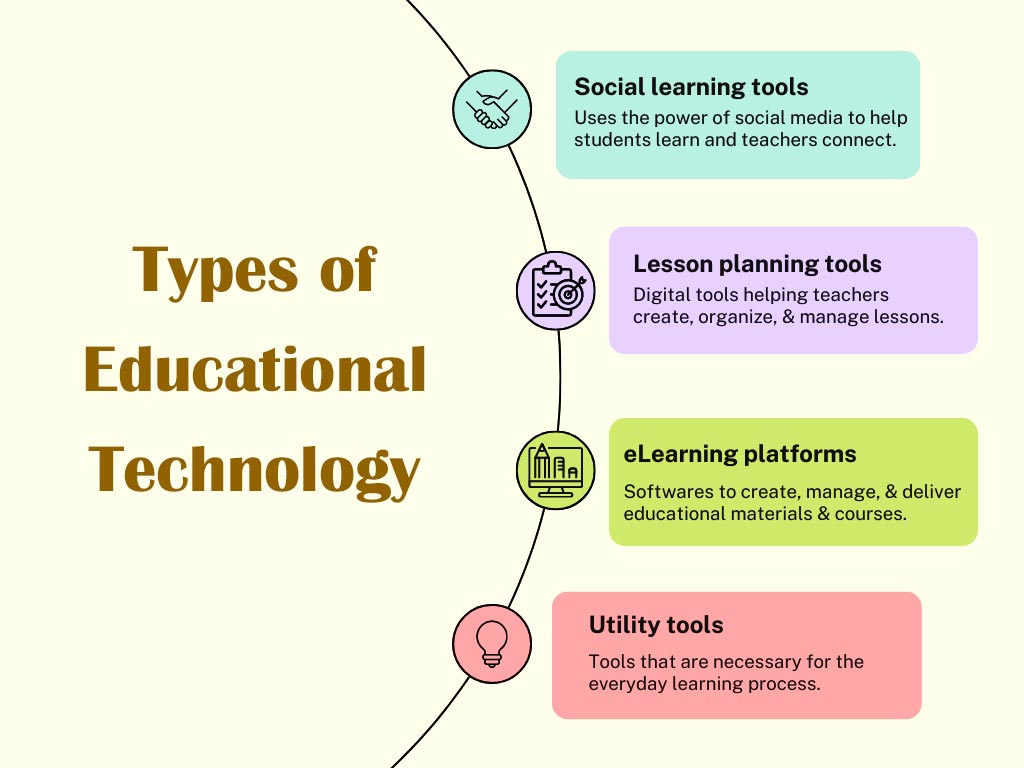
There are many different types of education technology tools, and they can be categorized in many ways. Here are a few best types:
Learning Management Systems:
These platforms allow teachers to manage and deliver educational content online. Examples include Google Classroom, Moodle, and Blackboard. A Learning Management Systems allows students to access their lessons, submit assignments, and track their progress all in one place.
Video Conferencing Tools:
Tools like Zoom, Google Meet and Microsoft Teams have become essential for online learning. They allow teachers and students to interact in real time, no matter where they are. This has been especially important during the COVID-19 pandemic when many schools shifted to remote learning.
Interactive Whiteboards:
These are digital versions of traditional whiteboards. Teachers can write on them using a stylus or their finger, and students can interact with the board in real time. Smartboards and Promethean boards are examples of interactive whiteboards that are commonly used in classrooms.
Educational Apps and Games:
Apps like Kahoot!, Duolingo, and Quizlet make learning fun and engaging. These apps use game-like features to help students learn new skills or practice what they’ve learned in class.
Online Course Platforms:
Websites like Coursera, Khan Academy, and edX offer free or paid courses on a variety of subjects. These platforms allow people from all over the world to learn at their own pace and gain valuable knowledge in areas like math, science, coding, and more.
Classroom Management Tools:
Tools like ClassDojo and Remind help teachers keep track of their students’ behavior and communicate with parents. These tools also allow teachers to create a positive classroom environment by rewarding good behavior and addressing issues quickly.
Classroom Management Tools:
Tools like ClassDojo and Remind help teachers keep track of their students’ behavior and communicate with parents. These tools also allow teachers to create a positive classroom environment by rewarding good behavior and addressing issues quickly.
Artificial Intelligence (AI) Tools:
AI is becoming a powerful tool in education. Programs like Grammarly use AI to help students improve their writing by providing feedback on grammar, spelling, and style. AI-based tools can also create personalized learning experiences by analyzing student performance and offering customized lessons.
Why Are Education Technology Tools Important?
Education Technology tools are important because they help solve many challenges that traditional education faces. Here are some of the reasons why these tools matter:
Accessibility: Education technology tools make education accessible to everyone, regardless of location or financial status. A student in a remote village can take an online course from a top university, or a child with a disability can use specialized software to learn at their own pace.
Personalization: Every student learns differently. Some learn best by reading, while others learn better through hands-on experiences. Education Technology tools can provide personalized learning experiences that suit each student’s needs. For example, AI-based tools can analyze how a student learns and offer lessons tailored to their strengths and weaknesses.
Engagement: Learning can sometimes be boring, but Education Technology tools help make it more fun and engaging. Interactive apps, educational games, and multimedia lessons keep students interested and motivated. Tools like Kahoot! allow students to compete in quizzes, making learning feel more like a game than a chore.
Collaboration: Technology allows students and teachers to collaborate in ways that were not possible before. With video conferencing tools, students can work together on group projects even if they are in different locations. Teachers can also share resources with one another, helping to improve the quality of education for everyone.
Efficiency: Education Technology tools make education more efficient by automating many tasks. Teachers can grade assignments, track student progress, and create lesson plans all with the help of technology. This frees up more time for them to focus on teaching and interacting with students.
Global Connectivity: Education is no longer limited to the classroom. With Education Technology, students can connect with people and resources from all over the world. They can participate in online courses taught by experts in different countries, learn new languages, and collaborate with peers from other cultures.
How educational technology tools are changing the classroom
Today’s classroom looks very different from the classroom of 20 years ago, thanks to educational technology tools. Here are a few ways these tools are changing education:
Blended Learning: Blended learning combines traditional classroom learning with online learning. Teachers use a mix of in-person lessons and digital tools to provide a more flexible and interactive learning experience.
The Flipped Classroom: In a flipped classroom, students learn new material at home using online videos or readings and then practice exercises in class with the help of the teacher.
Distance Education: Distance learning has become more common, especially during the COVID-19 pandemic. Through video conferencing tools and online platforms, students can attend school from home. This has opened up new opportunities for students who live in remote areas or have health problems that prevent them from attending school in person.
The Challenges of Education Technology Tools
While educational technology tools offer many benefits, they also bring challenges. Not all students have access to the Internet or the devices needed to use educational technology tools, which can widen the gap between students from different socioeconomic backgrounds. Additionally, teachers may need training to use these tools effectively in the classroom.
Privacy is another concern, as many educational technology tools collect data on students’ learning habits. It is important to ensure that this data is protected and used responsibly.
Conclusion
We are learning and teaching in a completely different way thanks to educational technology tools . They make education more accessible, personalized, and engaging, helping students succeed in the classroom and beyond. While there are challenges to overcome, the future of Education technology is bright, and it holds the potential to create a more connected and educated world for everyone.