

Many common methods for attracting or find clients as a freelancer tend to yield disappointing results:
- Sending cold emails to dozens or even hundreds of potential clients weekly
- Applying for freelance gigs
- Establishing a website and waiting for clients to find you
While these tactics might occasionally secure a job, the frequent rejections can be disheartening. Even when you land a client through these means, they often have unrealistic expectations and offer low compensation for your work.
The most valuable clients usually come from referrals.
If you lack a network, how can you land your first client? And once you start gaining clients, how can you ensure a consistent flow of work?
In this article, I’ll share a strategy that enables you to establish yourself as a recognized freelancer in your field, leading to a reliable stream of high-paying and low-maintenance clients.
Step 1: Define One Service for One Niche
It can be tempting to provide various services across multiple industries to secure your first client. Logically, it seems that offering more services would increase your chances of attracting a client from a broader audience.
However, most clients prefer to hire specialists for specific tasks.
Positioning yourself as a generalist can be counterproductive and may deter potential clients.
For instance, if you’re a cybersecurity firm looking to hire a writer, which candidate would you choose?
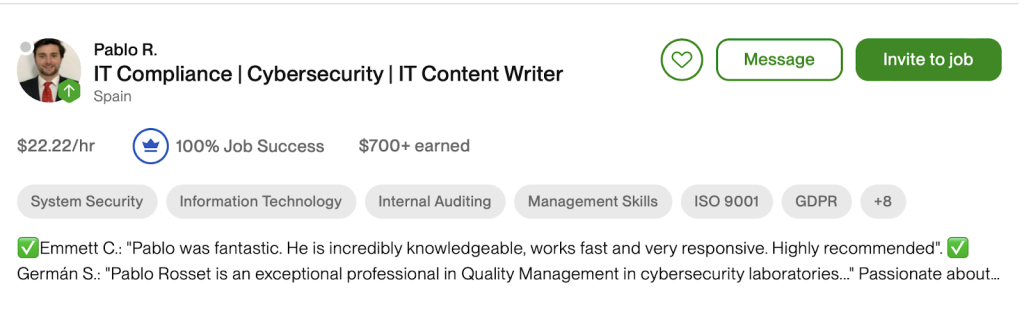
A cybersecurity client is more inclined to select Pablo because he specializes in cybersecurity writing.
Thus, it’s crucial to focus on one niche and offer one service.
By niching down, you also decrease competition, as there are significantly more generalists than specialists in any given area. For instance, there are many more “writers” than “cybersecurity writers.”
Positioning yourself as the go-to expert for one service in a particular niche instantly conveys expertise, even if your experience is limited.
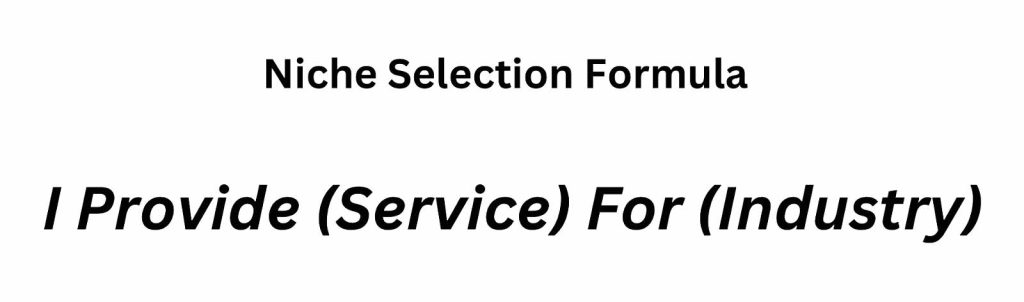
To choose a niche, you can follow this simple formula:
Examples of single services for specific niches include:
-
Web design for SaaS businesses -
SEO for real estate professionals -
Email marketing for e-commerce brands
A frequently asked question is whether a niche can be too narrow.
In general, it’s advisable to start with a smaller niche and expand later rather than the reverse.
To assess if your niche is too narrow, create a list of your ideal clients and research whether they currently use the service you intend to offer.
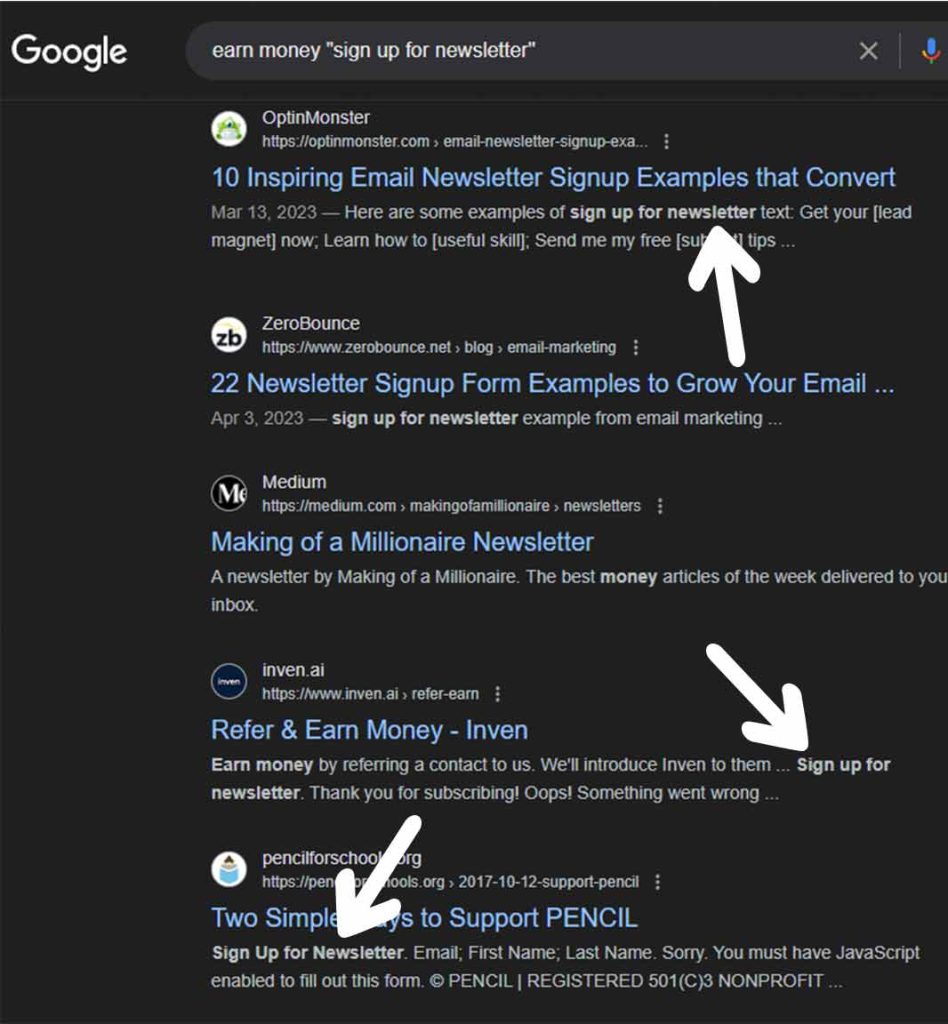
For instance, if you plan to provide email marketing for e-commerce, you can investigate how many e-commerce companies are already utilizing email marketing.
A quick search reveals that numerous e-commerce companies engage in email marketing.
Focusing on a specific niche also enables you to become highly proficient in a single service, allowing you to achieve better results for clients in less time. Consequently, you can charge more per hour for your work.
Step 2: Offer Your Services for Free
A common mistake that many aspiring freelancers make is to cold email numerous potential clients in their niche with a service pitch.
The issue is that these prospects receive countless cold email pitches each week, so it’s unlikely yours will get a response—even if you personalize it.
Instead, focus on identifying your dream client.
This should be a real business.
For instance, it could be a well-known company like Airbnb or Nike.
Next, determine who in that organization would be responsible for overseeing the service you provide.
For example, if your service is related to YouTube strategy, you might target the brand manager. If you specialize in email marketing, it could be the marketing director.
You can use LinkedIn for this, but I often find that Google can be a more effective tool for locating these individuals.
Here’s an example:
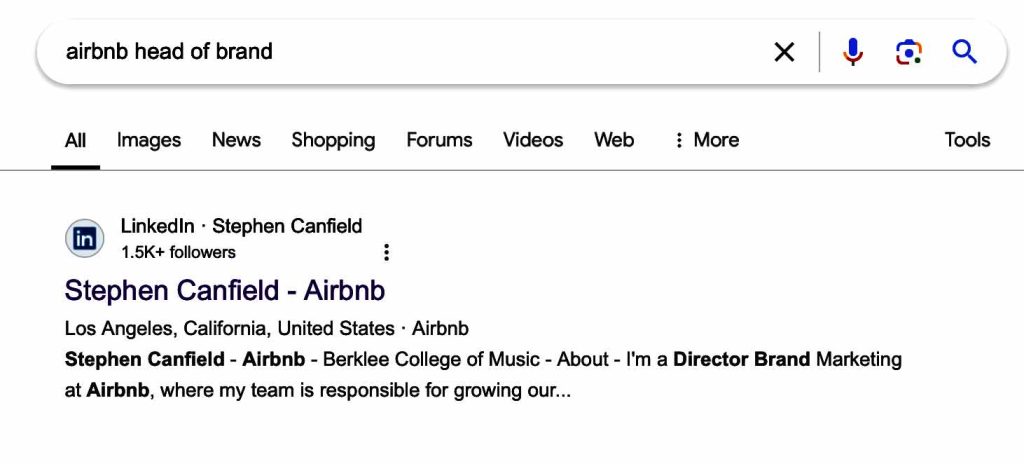

Ideally, aim to connect with an executive or senior-level decision-maker.
Once you’ve identified the company and the person, create not just a tailored pitch, but a complete strategy detailing how you will deliver your service. When possible, execute the entire plan and present them with the finished product.
For example, if you’re providing email marketing, send them a fully developed email sequence for their brand. If your focus is web design, share a completed mock-up. For SEO, provide a detailed keyword roadmap along with a blog post targeting one of those keywords.
Then, propose to continue providing your services for free for three months.
Here’s a specific email template you can utilize:

Here’s a practical example of how I might pitch email marketing services to an e-commerce company.

Keep your email concise—ideally three lines or fewer. Most importantly, make sure the recipient doesn’t have to put in any effort to benefit from your offer.
If you send a generic email offering your services for free, it still requires the recipient to decide what they want you to do, which often leads to rejection—even with a no-cost proposal.
Instead, if you specify exactly what you will deliver, the recipient only has to reply with “sure,” removing any burden and providing pure assistance.
It’s also crucial to emphasize that this pitch should be directed solely at your dream client. This approach demands significant upfront effort, as you’ll need to create real samples, but it often results in a high acceptance rate.
Moreover, securing a position—even if it starts as unpaid work—will enhance your credibility, making you more appealing to future clients seeking top-tier freelancers. The association with a reputable brand will also justify a higher price for your services.
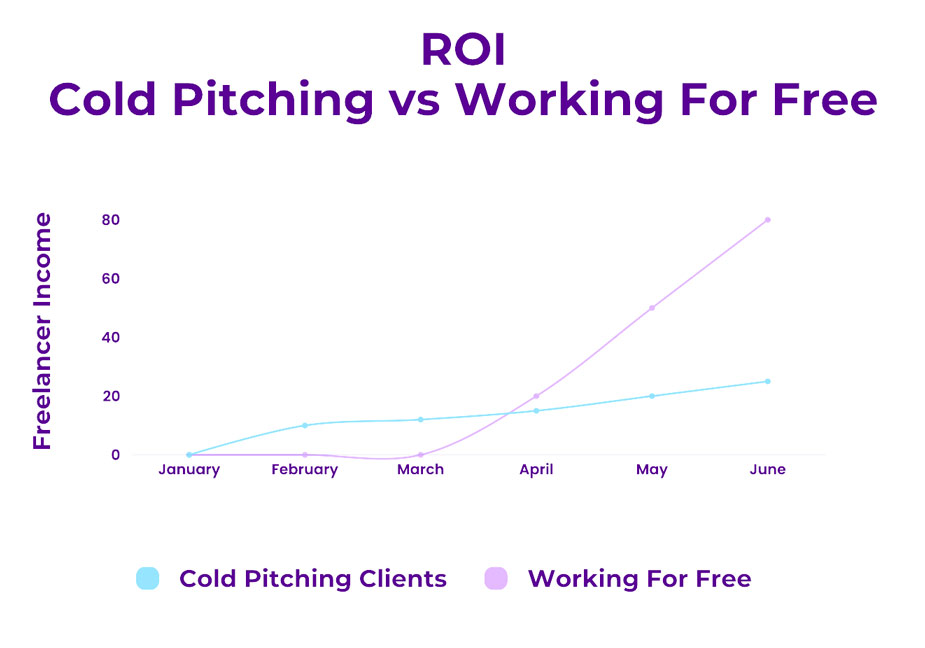
While it may take longer to see financial returns initially, your investment will yield benefits over time, allowing you to charge more and collaborate with better clients.
Step 3: Develop a Personal Brand
One of the primary challenges freelancers encounter is securing consistent work.
Even if you’ve partnered with some of the most reputable companies globally, it won’t help you attract new clients if your experience goes unnoticed.
The solution to maintain a long list of clients eager to collaborate with you is to develop a personal brand.
Personal branding involves establishing yourself as an authority in a specific area by sharing content relevant to that subject. This content draws followers who wish to learn more about the topic.
Once you cultivate an audience that sees you as an expert in your field, you’ll generate a steady demand for your services as these individuals will begin to reach out to you organically.
For instance, Alex Lieberman has built a strong personal brand as a B2B content creator, garnering hundreds of thousands of followers.
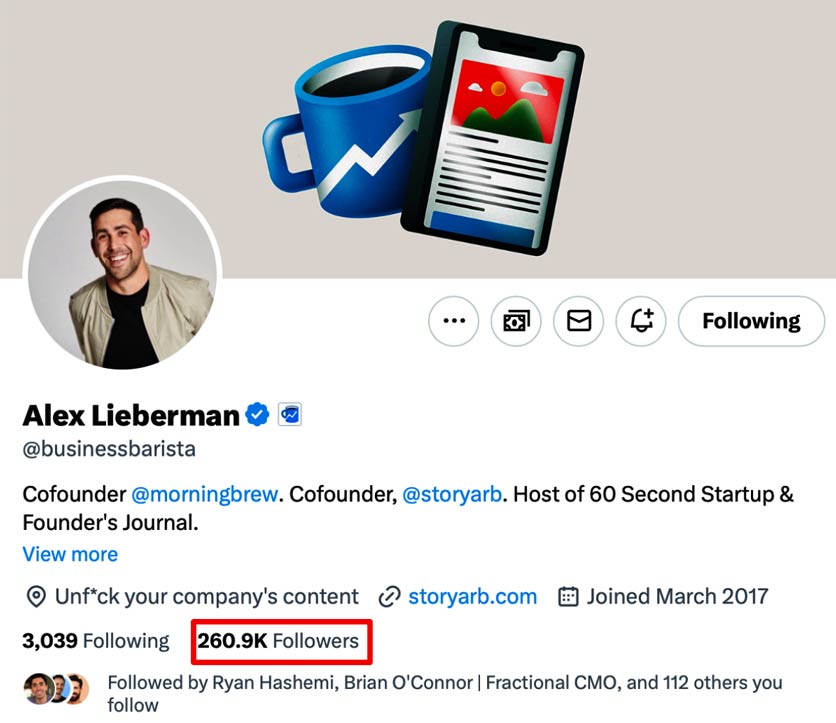
As a result, he consistently experiences high demand for his ghostwriting agency.
For example, he shared this Tweet:
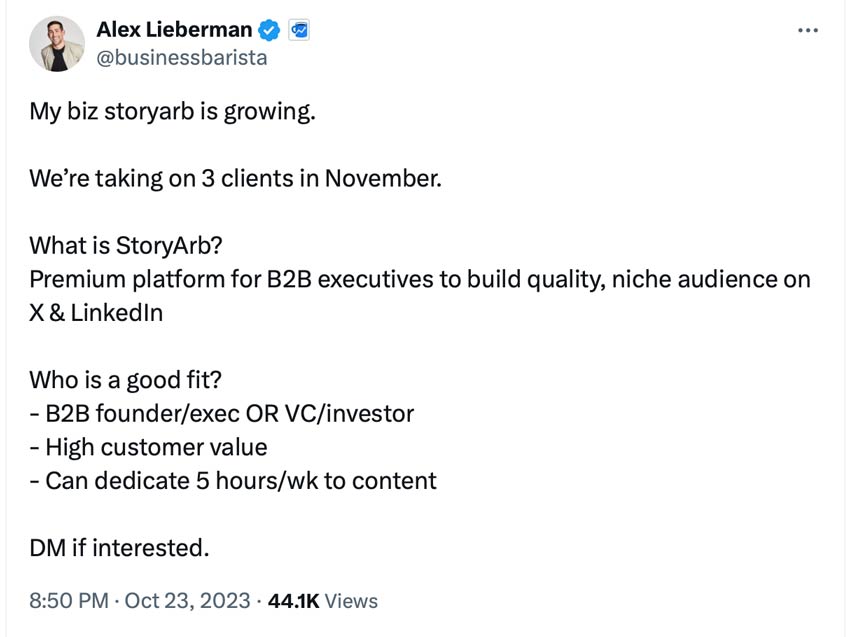
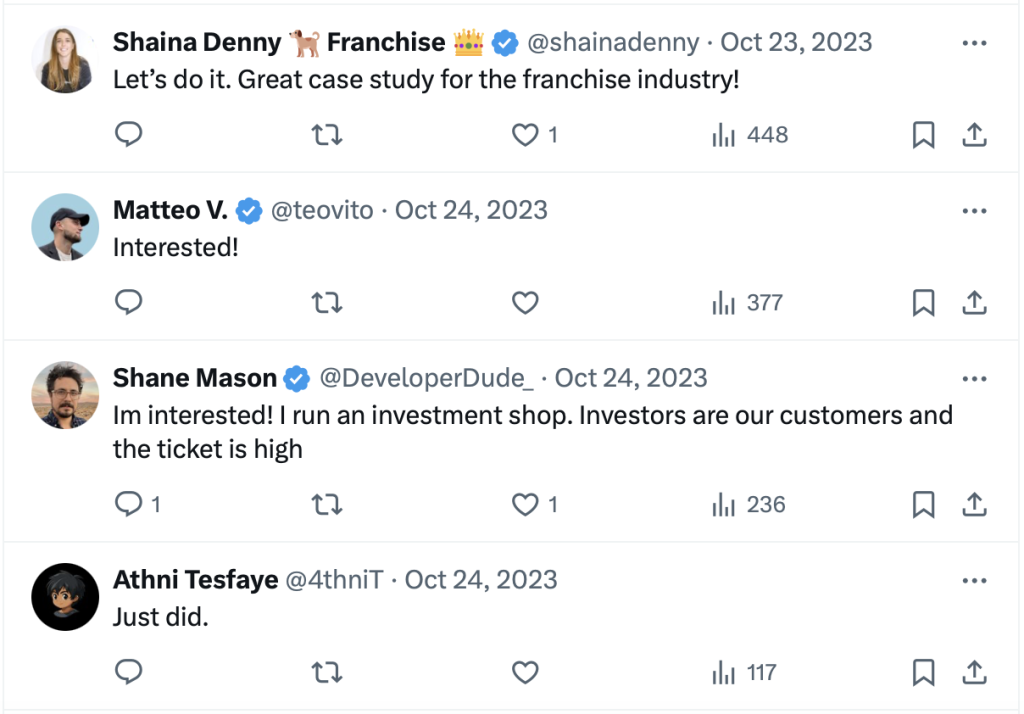
And it attracted significant interest in the comments.
The key to establishing a personal brand is to consistently share content related to the niche where you want to be recognized as an expert (e.g., web design for real estate professionals, email marketing for e-commerce, etc.).
But how can you create content on a topic if you lack experience?
First, remember that you’ve already produced several actual samples for the dream companies you pitched.
For instance, if you aimed to do email marketing for Nike, you would have created four sample emails tailored for them.
These samples can serve as your initial pieces of content.
Share them on your social media platforms, explaining what makes those emails effective and the key takeaways others can apply to their email marketing strategies.
This way, even if the company doesn’t accept your proposal, those samples will still help you in building your personal brand.
Even with thousands of paying customers, Patrick Campbell continues to conduct pricing page teardowns to demonstrate how others can enhance their pricing pages:

Another strategy is to interview other service providers within your niche and write case studies highlighting their work.
For example, Ryan Hashemi wrote a thread detailing influencer Codie Sanchez’s process for acquiring $200 million worth of businesses, and it garnered significant engagement. Even though it wasn’t his personal story, it helped him attract followers from his target audience.
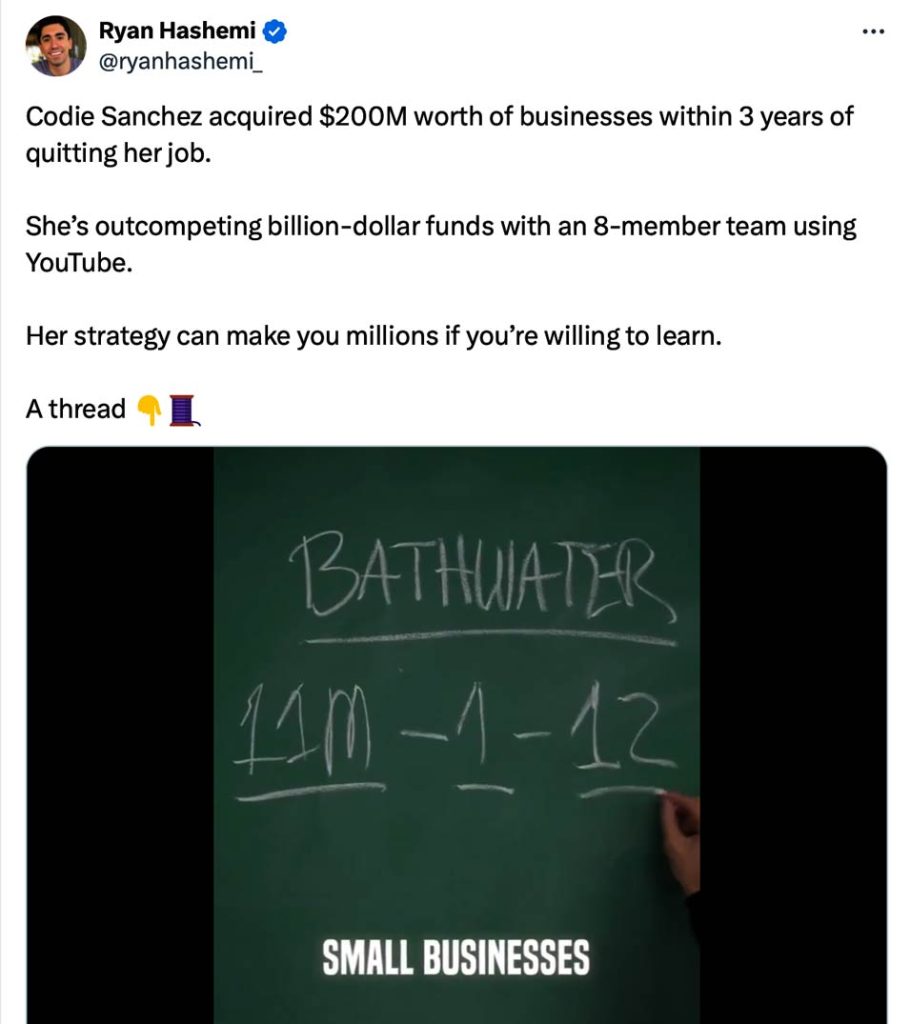
While it may seem unusual to highlight someone else’s achievements, crafting case studies on how they reached specific goals that your ideal clients aspire to achieve will help you gain their attention and build a relevant audience. This way, you’ll have a following when you start sharing content about your own work and experiences.
Moreover, you don’t need to wait until you have paying clients to create content about your work. You can also write about your experiences with your pro bono clients.
Once you gain some experience, consider using these frameworks to transform your experiences into engaging content:
-
A/B tests and lessons learned -
Personal failures and the insights gained -
Step-by-step guides to specific accomplishments you’ve achieved
A/B Tests and Lessons Learned
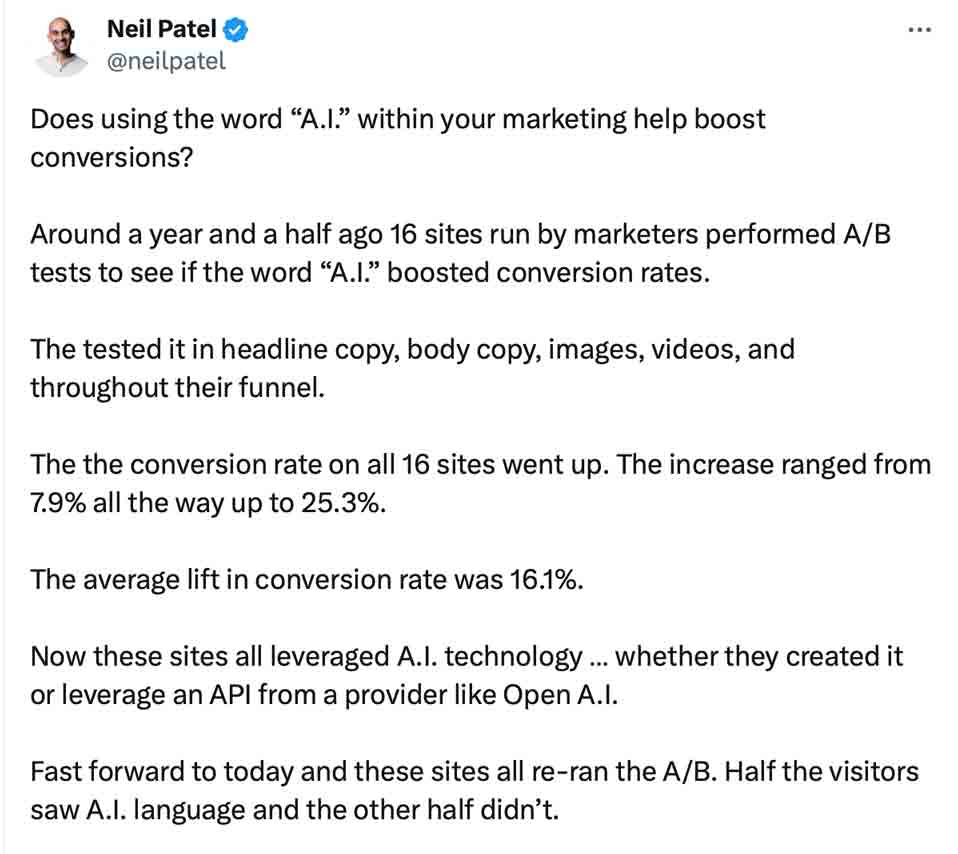
For instance, a marketing influencer conducted a small A/B test and subsequently wrote a post highlighting actionable insights derived from the experiment.
Personal Failures and Lessons Learned
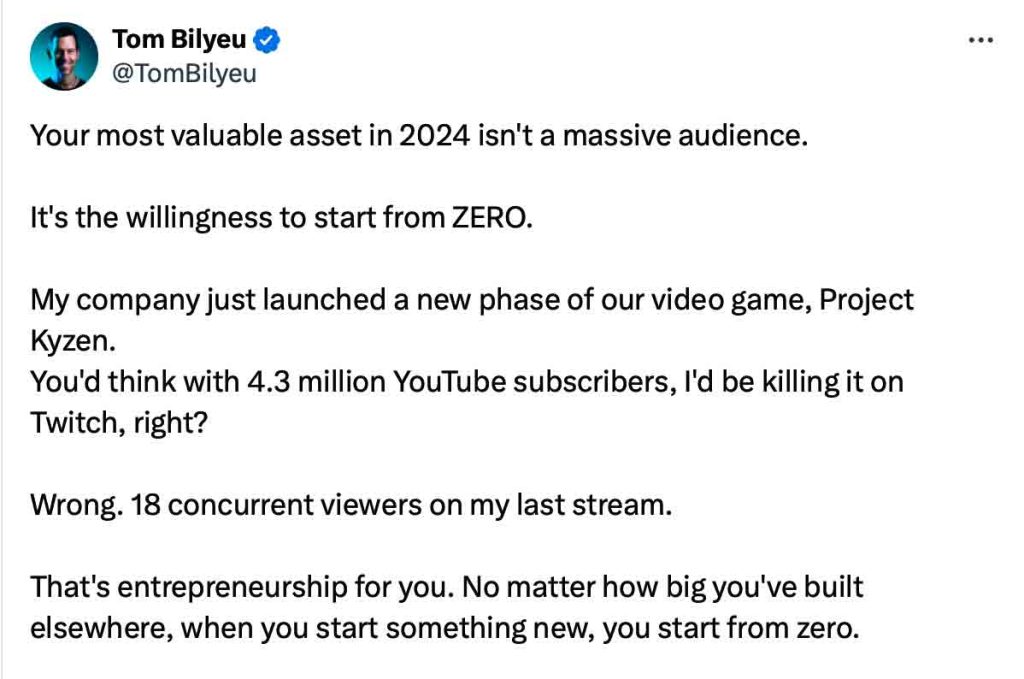
A compelling example comes from Tom Bilyeu, who recently attempted to launch on Twitch without success, despite having a substantial YouTube audience. He shared his experience about this setback.
Step-by-Step Instructions
Another effective approach is to provide detailed step-by-step instructions that you utilized to reach a specific objective.
Here’s a notable example:

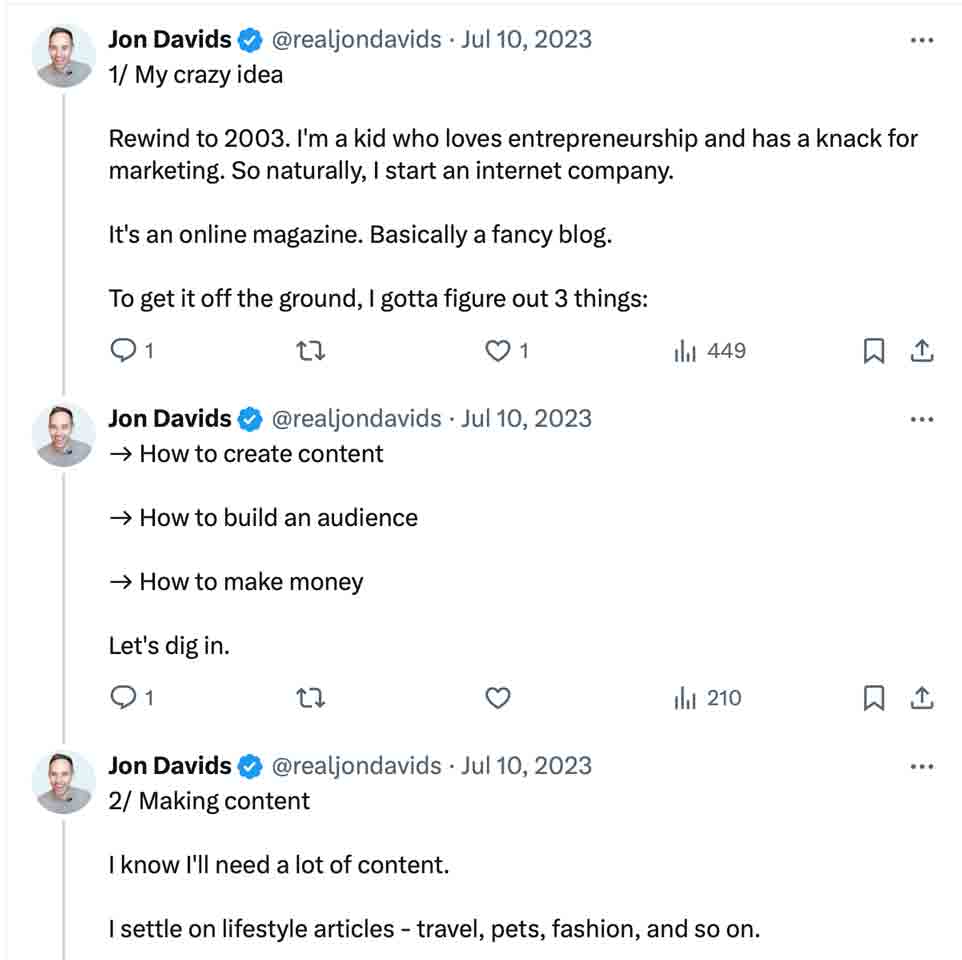
Remember, the achievement doesn’t need to be extraordinary. It could simply be a straightforward guide to enhancing landing page conversions.
Moreover, while people often focus on showcasing their successes, your audience may connect more deeply with your content if you present your achievements as challenges you’ve faced and the lessons learned from them.
This approach makes you more relatable and enhances the engagement of your content by infusing it with emotion and narrative.
If you’re seeking additional guidance on personal branding, look at the dedicated community and course focused on this topic. However, the most crucial step is to begin and consistently publish your content.
Step 4: Request Referrals
Establishing a personal brand and earning the trust of your target audience requires time. Therefore, the most effective way to secure your first paying clients is to convert your free clients into paying customers.
Provided that the service you offer is valuable, it makes perfect sense for the company you’re working with to compensate you for your efforts, as hiring new talent can be a hassle for most managers.
To expand your client base, the next step is to request referrals from your current clients. Here’s a sample email template you can utilize:
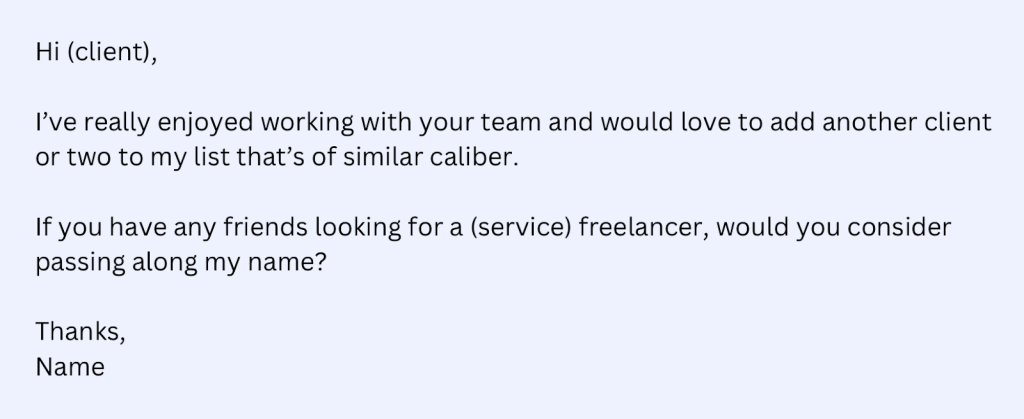
The best clients often seek recommendations from their peers, making it vital to ask your existing clients for referrals as one of the most effective methods to acquire high-quality clients.
This is also why it’s essential to work for free only with dream clients, as they typically possess extensive networks and can connect you with other excellent brands.
Even if your clients don’t currently know anyone in need of freelancers, asking for referrals signals that you are seeking more work. This can lead them to send more referrals your way in the future, or they may consider expanding their contract with you.
Step 5: Establish Systems and Processes
A process is a structured approach that enables you to consistently achieve the same results.
When clients recognize that you have a well-defined process, they will feel more assured of receiving reliable quality, which sets you apart from other freelancers.
Quality clients prefer not to micromanage freelancers, and having a clear process alleviates the need for clients to provide project outlines, deadlines, and execution instructions.
Thus, developing an established process is crucial for justifying premium pricing.
To begin creating a process, document how you complete each aspect of your work.
Start by drafting the project outline. For instance, here’s what my own writing process looks like:
- Keyword research
- Post outline
- First draft
- Incorporate examples, graphics, and data
- Edit the final draft
Next, elaborate on how you perform each step. Here’s an example of my keyword research process:
- Identify topics related to challenges that building a personal brand (our community and digital product) aims to address.
- Locate relevant keywords by analyzing competing websites and utilizing a keyword research tool like Ahrefs.
- Choose the keyword that aligns best with the topic and offers the ideal combination of low difficulty and high search volume.
Repeat this for all subsequent steps (e.g., post outline, first draft, etc.).
Then, arrange each of these processes into a project timeline, similar to this:
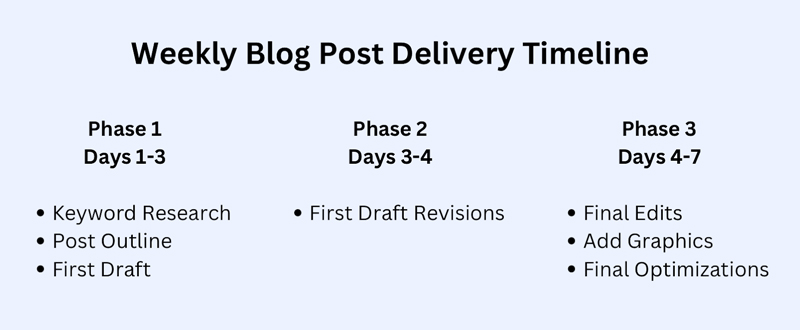
Presenting this structured approach to a client clarifies why your process is effective and instantly distinguishes you from other freelancers.
Your processes may evolve over time, which is completely acceptable.
Even if you’re just starting out and haven’t completed any client work, you can still formulate these processes while creating free samples to pitch clients.
As your personal brand develops, client demand will grow, and you might choose to expand your team.
Processes become especially vital as you build a team, as they enable you to deliver consistent results at scale. For instance, I could share my keyword research process with anyone who has a basic understanding of SEO, and they would be capable of identifying similarly suitable keywords.
Question: What project management software should I utilize?
When individuals consider developing processes, they often think about project management software and organizing calendars and task lists.
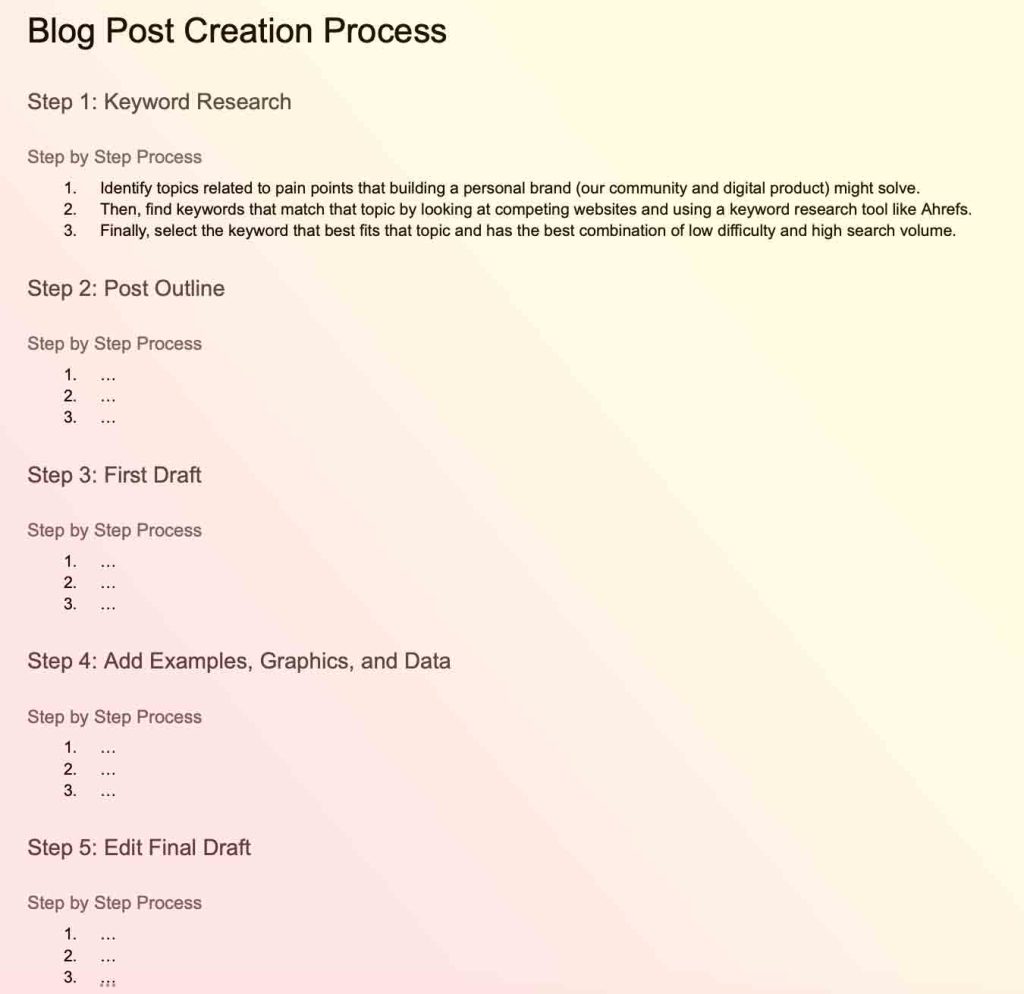
While project management software can be beneficial as you expand a team, it isn’t essential when you’re starting out. A simple Google Doc can effectively outline your step-by-step process for executing each part of the broader project timeline.
Here’s a sample template you can use:
If you liked this article, then please subscribe to our YouTube Channel for WordPress video tutorials. You can also find us on Twitter and Facebook.