
Knowing how to write a professional letter of resignation with examples is essential for leaving a lasting positive impression. A well-crafted resignation letter goes beyond formality—it’s an opportunity to express gratitude, maintain professional relationships, and end on a high note. While it should clearly state your intention to resign and specify your last working day, adding personal touches can make it truly impactful.
Take time to meditate on the opportunities, growth, and relationships you’ve experienced in your role, and use your letter as a chance to sincerely thank those who’ve supported you. Offering to help with the transition demonstrates your commitment and professionalism, showing respect for your team and their continued success.
By maintaining a positive and gracious tone, you not only leave on good terms but also lay the foundation for future connections, whether for references or professional collaborations. A thoughtful resignation letter isn’t just an end—it’s a way of expressing appreciation and leaving your role with integrity and warmth.
Definition of Resignation Letter
A resignation letter is a formal communication in which an employee informs their employer of their decision to leave their position. This document is an official record of the employee’s motive to resign. It typically includes essential information such as the date the resignation takes effect and the employee’s final working day.
How to Write a Respectful Resignation Letter: A Step-by-Step Guide
Understanding how to write a professional letter of resignation can simplify the process and help you leave your role on a positive note. With a clear and respectful approach, crafting an effective resignation letter becomes straightforward. Let’s explore the steps together.
1. Identify Your Recipient
Before drafting your letter, determine who will receive it. Is it your direct supervisor, someone in HR, or perhaps the CEO? Knowing your audience helps set the tone of your letter, ensuring it’s appropriate—neither too formal nor too casual.
For example, if the letter is directed to someone in HR whom you’ve never interacted with, maintain a formal tone. If it’s for a manager you’ve worked with for years, you can be a bit more personal while still keeping it professional.
The recipient will also influence the content of your letter. Are you simply giving notice, or do you want to open a discussion about the transition process? Perhaps you want to take this opportunity to thank your manager for their support. Tailoring your letter to the recipient ensures it resonates well.
2. Include the Essential Details
Your resignation letter should contain the following key elements:
Your contact information: Start with your name and address in a professional format, typically at the top of the page.
The date: Include the date the letter is written, left-aligned beneath your address. This serves as an official timestamp for your notice.
Company information: Add the company’s name and address to complete the formal letter format.
A polite salutation: Address your letter appropriately. Most often, it will be directed to your immediate supervisor, but in some cases, it may be addressed to a department or the entire organization.
Your final workday: Clearly state the date of your last day at work. This allows the company to plan accordingly.
Optional reason for leaving: If you’re comfortable sharing, you can briefly mention your reason for resigning, whether it’s a new career opportunity, relocation, or personal reasons.
Offering support during the transition: Showing your readiness to assist during the handover process highlights your professionalism and helps preserve a positive relationship.
A message of thanks: Take the opportunity to express gratitude for the experiences and opportunities you’ve had while working with the company.
A polite closing: End the letter with a respectful sign-off, such as “Best regards” or “Thank you,” followed by your name. If submitting a physical letter, remember to sign above your typed name.
3. Send Your Resignation Letter
Once your resignation letter is finalized and thoroughly reviewed, it’s time to send it. If you’re submitting it via email, you can either include the letter as an attachment or write it directly in the email body.
What Should You Avoid Including in a Resignation Letter?
When writing a resignation letter, it’s important to focus on professionalism and avoid certain elements that could leave a negative impression. Here’s a guide to what you should leave out:

1. Future Career Plans
While it’s fine to mention that you’re moving on, there’s no need to go into detail about your next role. Keep the focus on wrapping up your current responsibilities and supporting your team during the transition.
2. Negative Language
Refrain from making negative remarks about your role, the company, or your colleagues in your resignation letter. Even if you’ve faced difficulties, this isn’t the appropriate time to voice complaints. Maintaining professionalism is crucial, as you might encounter former coworkers again, especially if you remain in the same industry.
As George Cotter, an SEO consultant at Tall Marketing, explains, “If conflicts or negative experiences are the reason for your departure, your resignation alone communicates enough. There’s no need to elaborate further.”
3. Emotional Statements
It’s natural to have strong feelings when leaving a workplace, especially if you’ve built close relationships. However, keep your resignation letter formal and professional. Save personal goodbyes or emotional messages for face-to-face conversations with colleagues or managers.
4. Criticism of Coworkers
Steer clear of making negative remarks about anyone at the company. A resignation letter intends to formally announce your departure, not to evaluate your coworkers or managers.
5. Anger or Resentment
When learning how to write a professional letter of resignation, it’s crucial to maintain a positive and respectful tone, even if your departure stems from unfavorable circumstances. Avoid expressing frustration or bitterness in your letter. Daniel Cook, HR and marketing executive at Mullen and Mullen, advises, “A resignation letter should emphasize the future rather than dwell on past issues. It’s not the right platform to voice complaints about the company or colleagues.”
Instead, focus on the positive aspects of your time at the organization, such as valuable experiences or lessons learned. Keeping a constructive and forward-looking tone ensures your resignation letter reflects professionalism and gratitude, leaving a lasting positive impression.
Short Resignation Letter Example
Short resignation letters are perfect for situations when:
- You need to leave unexpectedly due to personal or professional reasons.
- You prefer not to share extensive details about your departure.
- You want to maintain professionalism despite dissatisfaction.
- You’ve been with the company for a brief time.
Example:

Detailed Resignation Letter Example
A longer resignation letter can be the right choice if:
- You’re departing on good terms and want to highlight your positive experience.
- You’ve spent significant time with the company and established meaningful connections.
- You wish to leave the door open for potential collaborations in the future.
Example:
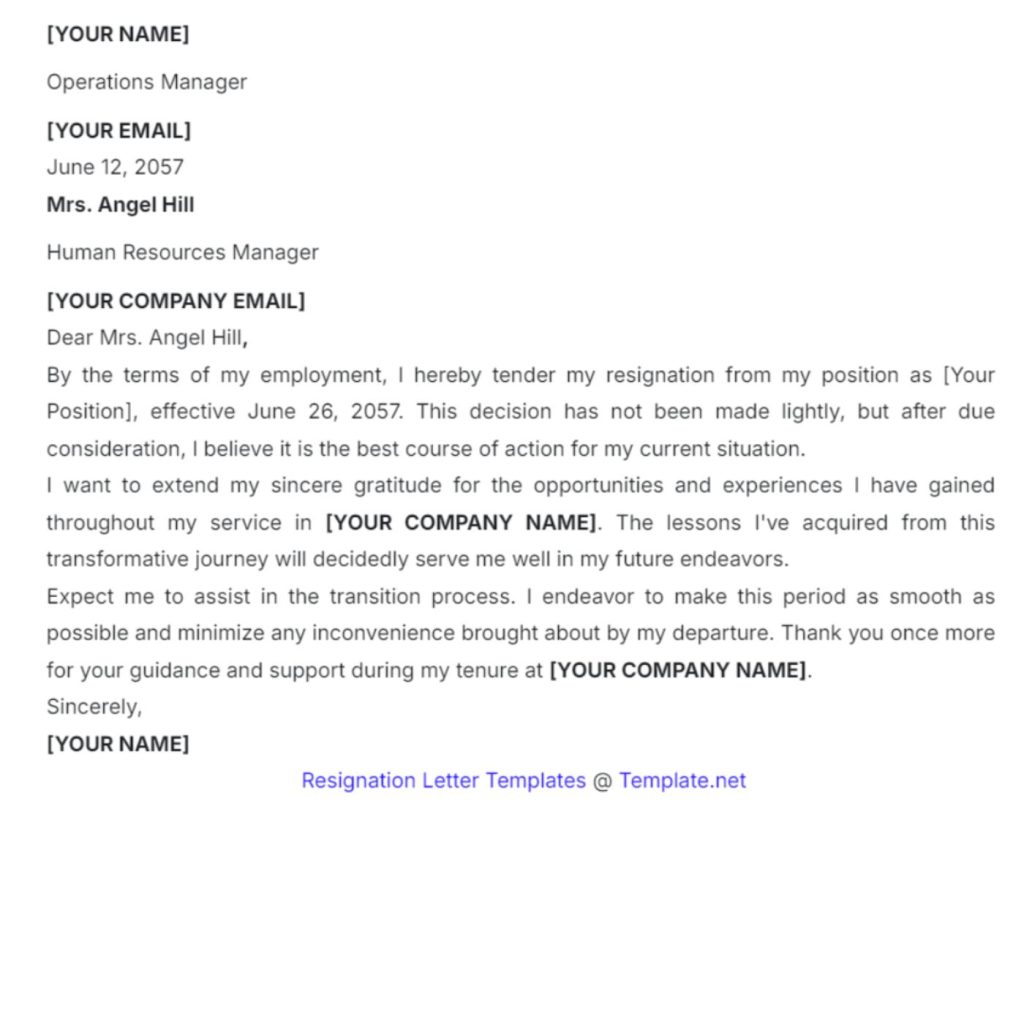
Simple letter of resignation template
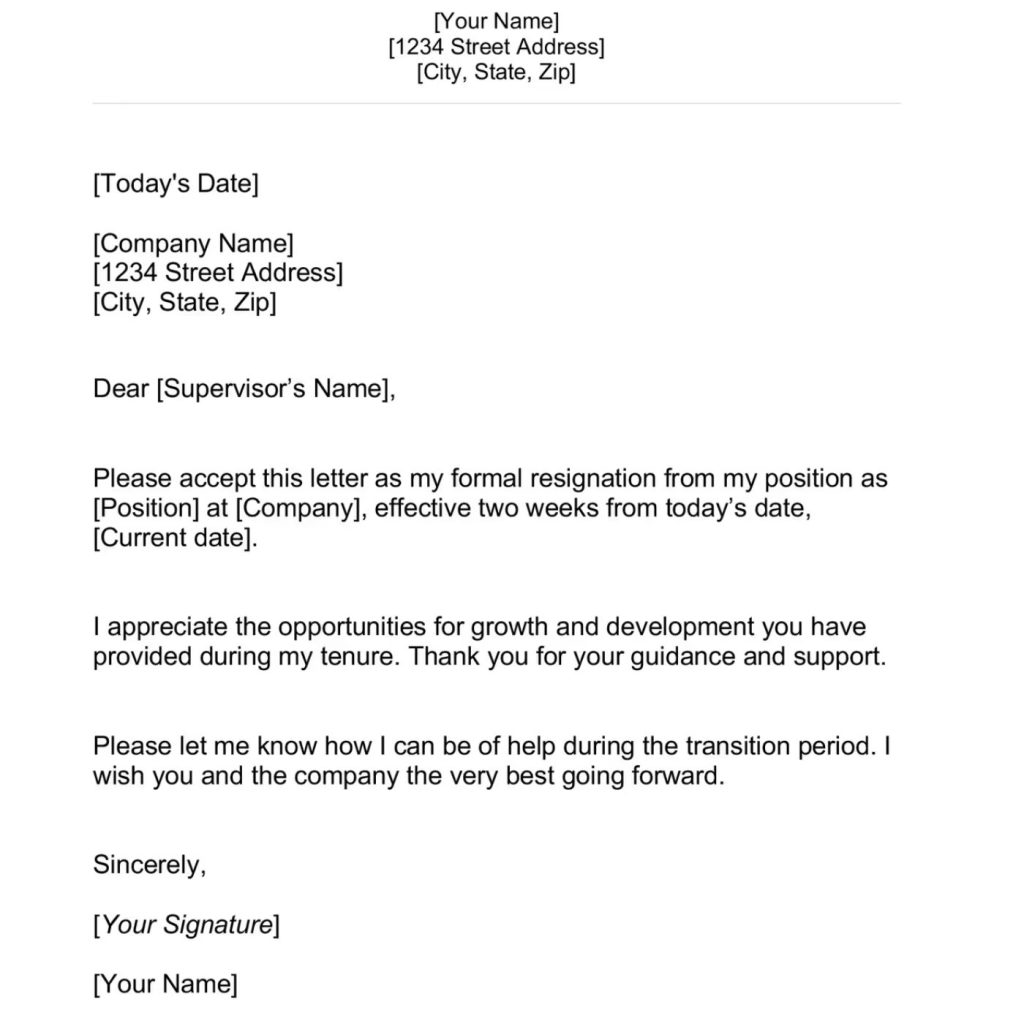
Formal letter of resignation template
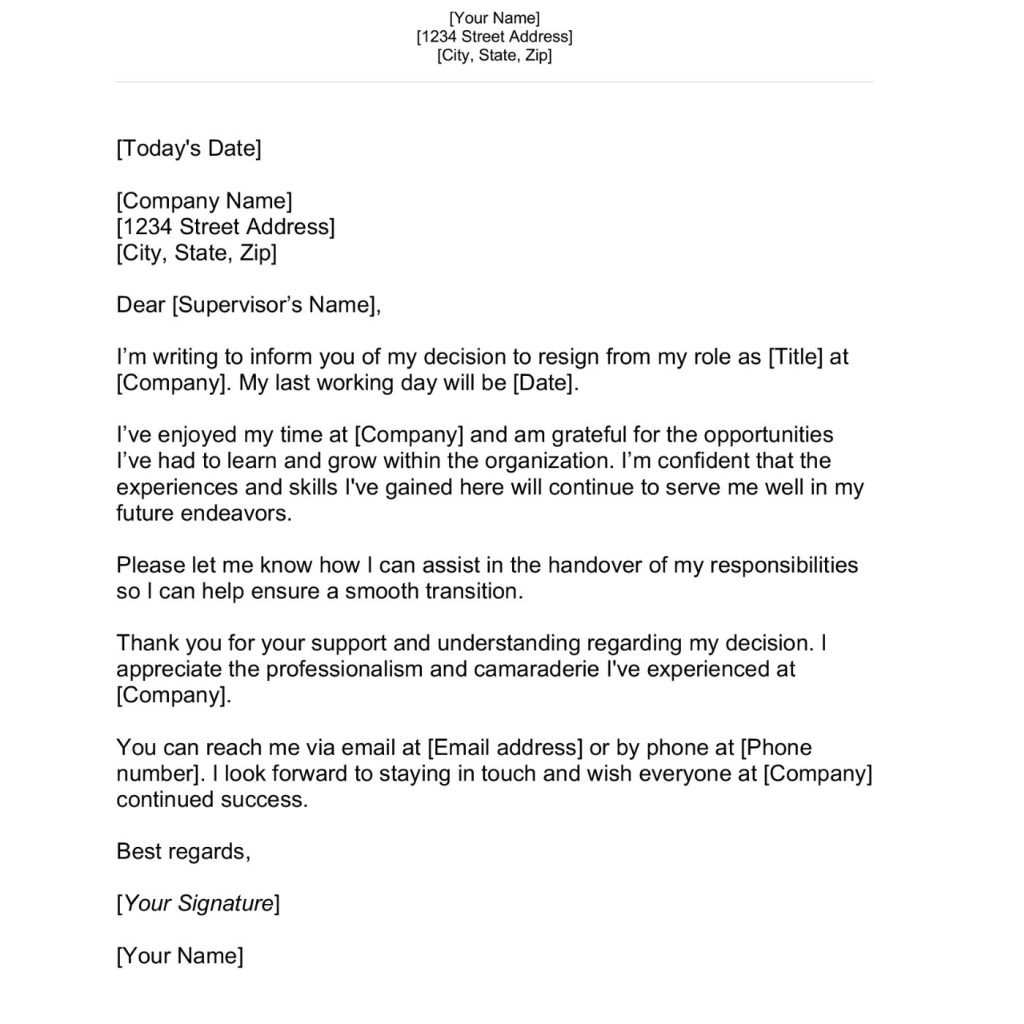
Final Advice
Your resignation letter is a key part of your professional brand. Don’t let a single bad experience prevent you from maintaining professional connections and preserving your network as you embark on your next adventure.