
Introduction
In the rapidly evolving world of technology, [quantum computing{Link}] has become a buzzword, and at the heart of this revolutionary field is the qubit. But what exactly is a qubit, and how is it shaping the future of computing? This article will break down the basics of qubits, how they work, and the impact they will have on industries worldwide.
What is a Qubit?
A qubit, short for quantum bit, is the fundamental unit of information in quantum computing. Unlike a classical bit, which can represent either a 0 or a 1, a qubit can exist in both states simultaneously thanks to the principle of superposition. This unique characteristic allows quantum computers to process complex data exponentially faster than traditional computers.
How Do Qubits Work?
To understand how qubits work, it’s essential to know two key principles of quantum mechanics: superposition and entanglement.
Superposition: While classical bits are like light switches that are either on or off (1 or 0), qubits can be in multiple states at once. This means they can perform multiple calculations simultaneously, speeding up data processing.
Entanglement: Entanglement is a phenomenon where two qubits become linked, and the state of one qubit can instantly influence the other, regardless of distance. This enables quantum computers to solve problems that are beyond the capabilities of classical computers.
Why Are Qubits Important?
Qubits are important because they allow quantum computers to tackle problems that would take traditional computers thousands of years to solve. Industries such as cryptography, artificial intelligence, drug discovery, and financial modeling will be transformed by the immense processing power of qubit-based computers.
For example, in cryptography, quantum computers could break the encryption systems that currently protect our data. This has spurred the development of quantum-safe encryption to stay ahead of potential security threats. In pharmaceuticals, quantum computers can simulate molecular structures with a precision that could lead to the discovery of new, life-saving drugs.
Current Challenges of Quantum Computing
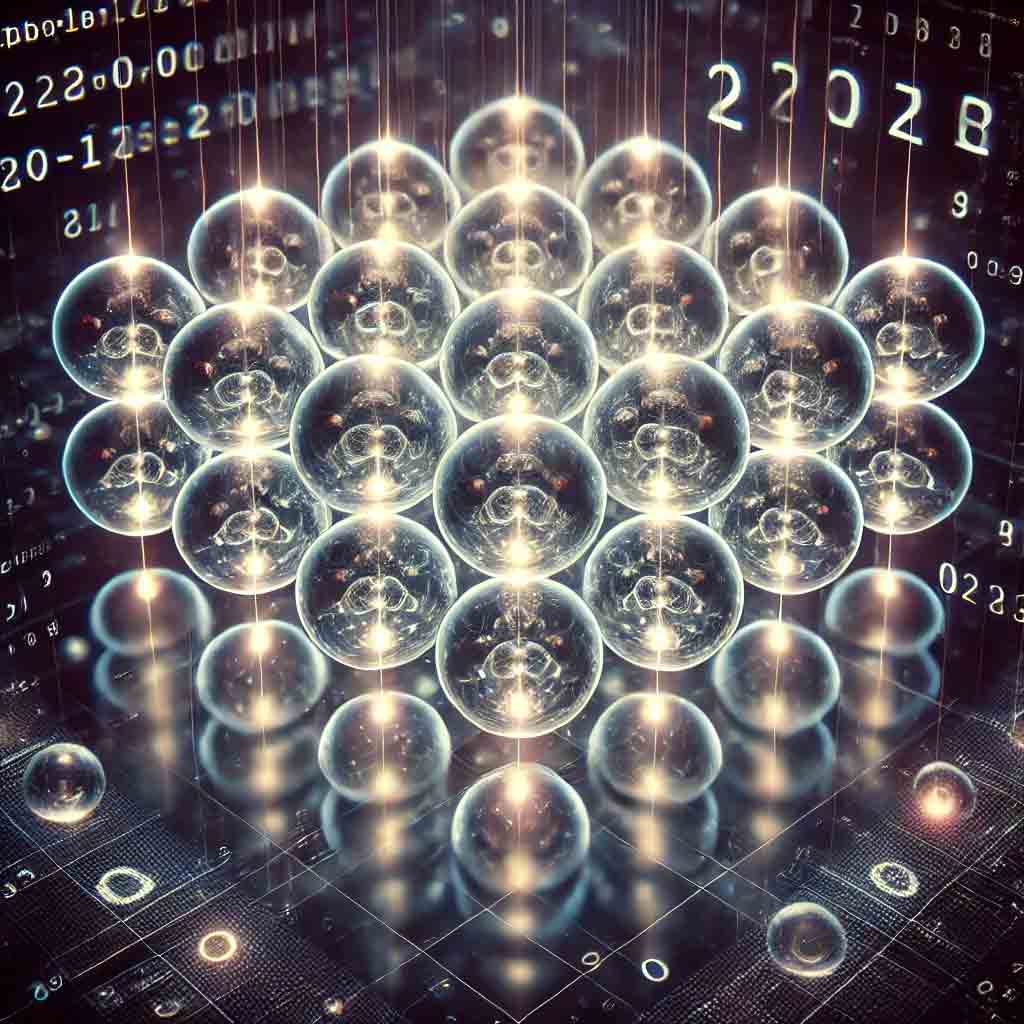
Despite its potential, quantum computing is still in its infancy. There are several hurdles to overcome, particularly in stabilizing qubits, which are highly sensitive to environmental factors like temperature and electromagnetic interference. This phenomenon, known as quantum decoherence, can cause qubits to lose their information, limiting their usefulness for extended calculations.
Moreover, building scalable quantum computers that can handle large numbers of qubits is another significant challenge. As of now, leading tech companies like IBM, Google, and Microsoft are working hard to develop more stable and scalable quantum systems.
The Future of Qubits and Quantum Computing
Quantum computing has the potential to redefine our approach to solving complex problems. In the future, we can expect quantum computers to enhance everything from financial markets to healthcare. Governments and private sectors are investing heavily in quantum research, and we may soon see breakthroughs that allow quantum computers to become a part of everyday life.
Though we are still years away from fully realizing the benefits of qubits, the progress being made is promising. The future may hold quantum processors capable of tackling climate change, developing new materials, and even revolutionizing artificial intelligence.
Qubits represent a leap forward in how we think about computing. With their ability to perform complex calculations at lightning speed, qubits will redefine industries and solve problems that are impossible for today’s classical computers. While challenges remain, the future of qubits is bright, and their impact will be felt across every field of technology.